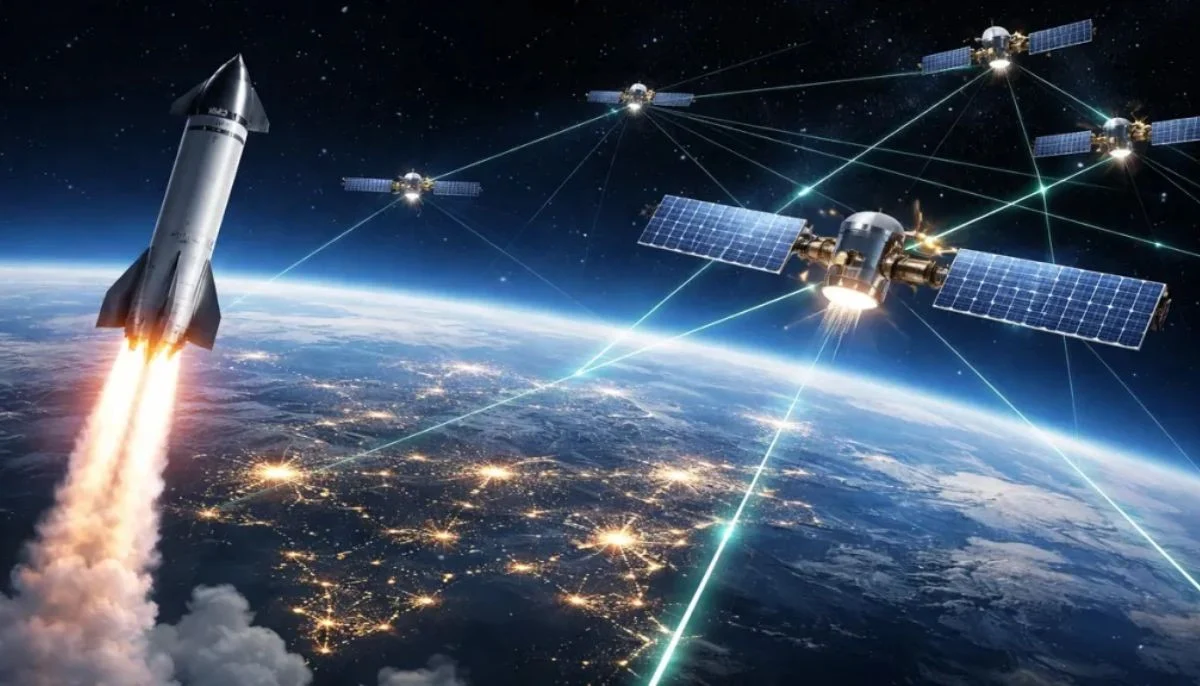
When SpaceX completed its all-stock acquisition of xAI in February 2026, it wasn’t just a corporate restructuring move — it fundamentally changed what SpaceX is as a company. Our Is AI Search Replacing Google guide covers the AI competitive landscape that xAI’s Grok assistant operates within.
In this article
- What the Merger Actually Combined
- The Business Logic Behind Combining a Rocket Company With an AI Lab
- Colossus: The Infrastructure Behind Grok
- Why Aerospace Engineering Culture Translates to AI Infrastructure
- Revenue Reality: AI Is Now a Major, Fast-Growing Segment
- The Power Problem This Creates
- What This Means for Grok’s Competitive Position
- A Genuinely Unusual Corporate Structure
- The Bottom Line
What the Merger Actually Combined
The deal formally merged two of Musk’s largest ventures — SpaceX’s rocket and satellite infrastructure, and xAI’s AI research and Grok assistant — into a single entity with a combined valuation reported around $1.25 trillion at the time. This also brought X (formerly Twitter) more formally under the same corporate structure, given its existing deep integration with Grok.
The Business Logic Behind Combining a Rocket Company With an AI Lab
On the surface, rockets and AI chatbots seem like unrelated businesses. The connection becomes clearer when you consider infrastructure: training and running large AI models at scale requires massive, reliable compute and power infrastructure — something SpaceX’s engineering and operational capabilities were well-positioned to support. Combining the businesses let Musk direct SpaceX’s capital, engineering talent, and infrastructure-building expertise directly at xAI’s compute needs. Reuters’ coverage of the SpaceX-xAI merger detailed the structure of this unusual cross-industry combination when it was announced.
 Also readMeta’s New Personal Agent Protocol: 7 Things to Know Before You Let AI Shop for You
Colossus: The Infrastructure Behind Grok
The combined entity’s AI ambitions run through the Colossus supercomputer cluster in Memphis, reportedly built around more than 100,000 Nvidia GPUs, used to train and run Grok at scale. This is one of the largest single AI compute clusters built by any company, reflecting just how much infrastructure investment now underlies even a conversational AI product that most users interact with through a simple chat interface.
Why Aerospace Engineering Culture Translates to AI Infrastructure
SpaceX’s core engineering culture — rapid iteration, aggressive timelines, and a willingness to build large-scale physical infrastructure quickly — turns out to translate surprisingly well to AI compute buildout, which similarly requires fast, large-scale physical construction (data centers, power infrastructure, cooling systems) rather than purely software development. This operational overlap is part of what made combining the two companies more logical than it might initially appear, beyond just Musk’s personal involvement in both.
Revenue Reality: AI Is Now a Major, Fast-Growing Segment
By SpaceX’s own Q2 2026 reporting, the AI segment contributed roughly $2.56 billion of the company’s $7.81 billion total quarterly revenue — a meaningful and rapidly growing share, driven by new large-scale compute contracts reportedly including deals with Anthropic and Google. Musk has told employees he expects AI revenue to exceed the combined rocket and satellite business by September 2026. Our ChatGPT vs Claude vs Gemini guide covers the competitive AI assistant landscape Grok is competing within.
The Power Problem This Creates
Running Colossus at the scale required for competitive AI performance has created real friction: the current data centers rely partly on gas turbines to meet power demand, drawing criticism given the environmental footprint of that approach. This tension — massive AI compute ambitions colliding with power generation and environmental constraints — isn’t unique to SpaceX-xAI, but the company’s scale and public profile make it a particularly visible example of an industry-wide challenge.
What This Means for Grok’s Competitive Position
- Direct access to SpaceX’s capital and engineering resources gives Grok infrastructure backing few AI competitors can match
- Real-time integration with X’s data gives Grok a distinctive training and product advantage over assistants without that access
- The merger signals Musk is treating AI as SpaceX’s next major growth vector, not just a side project run through a separate company
- Combined scale may accelerate Grok’s compute capacity faster than standalone AI labs without aerospace-level infrastructure backing
A Genuinely Unusual Corporate Structure
Few companies in history have combined aerospace and AI infrastructure under one roof at this scale. It reflects Musk’s broader pattern of building interconnected businesses that reinforce one another rather than operating as fully independent ventures — the same pattern seen in how Tesla’s battery expertise feeds into SpaceX’s engineering culture, or how Starlink revenue helps fund SpaceX’s more speculative programs.
The Bottom Line
The SpaceX-xAI merger has turned one of the world’s most recognizable rocket companies into a major AI infrastructure player, with AI revenue growing fast enough that Musk expects it to overtake the company’s traditional rocket and satellite business within 2026. The Colossus supercomputer cluster and its underlying power demands illustrate just how much physical infrastructure now sits behind even a simple AI chat interface — and how thoroughly the AI boom is reshaping companies that weren’t originally built around AI at all.