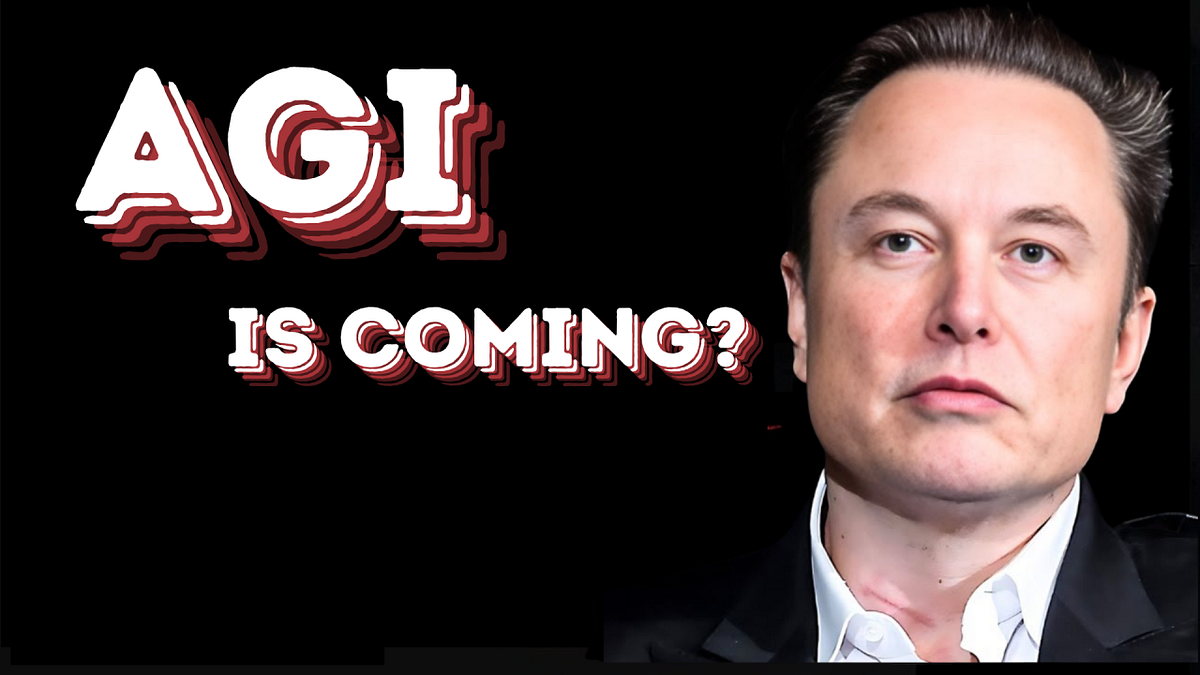
Elon Musk has predicted that artificial general intelligence is imminent multiple years in a row now, and tracking that pattern reveals something genuinely useful about how to evaluate AI timeline predictions generally, not just from Musk specifically. Our guide on Is AI Search Replacing Google covers a related case where AI hype and actual measured market impact diverged in an instructive way.
The Prediction Pattern, Laid Out Plainly
In May 2024, Musk told Google AI Studio’s head of product Logan Kilpatrick that AGI would likely arrive “next year” — meaning 2025. That timeline ultimately passed without fulfillment. By late 2025, Musk had shifted the prediction to xAI achieving AGI within “the next couple of years, and maybe as soon as 2026,” according to a Business Insider report covered by Gizmodo. Most recently, during a live podcast interview at Tesla’s Gigafactory Texas, Musk stated plainly: “I think we’ll reach AGI this year” — referring directly to 2026.
Why This Pattern Matters for How You Read AI News
This isn’t really a story about whether AGI is close at hand—it serves as a case study in how to calibrate confidence when evaluating any bold technology timeline prediction, especially from someone with a direct financial and reputational stake in the outcome. A prediction that shifts by exactly one year, every year, for three consecutive years, is a genuinely useful pattern to notice before treating the next version of the same prediction as more credible than the last. To see how other tech sectors navigate ambitious capability claims, explore our analysis on CES 2026’s Laptop Chip War.
 Also readMeta’s New Personal Agent Protocol: 7 Things to Know Before You Let AI Shop for You
What Definition of AGI Is Even Being Used
Part of what makes these predictions hard to evaluate objectively is that “AGI” itself lacks a single, universally agreed-upon definition. Researchers, corporate labs, and independent commentators use meaningfully different bars for what counts as general intelligence, ranging from matching human cognitive performance across most routine tasks to something closer to matching top human experts across virtually all specialized domains. Without a shared definition, a claim that AGI has been successfully achieved is genuinely difficult to verify or falsify from the outside, which is part of why these declarations can be made repeatedly without a clear resolution either way.
The Business Incentive Behind Bold AI Predictions
It’s worth being direct about the incentive structure here: bold AGI timelines help attract massive investment into AI ventures, and xAI has reportedly raised tens of billions of dollars in funding across recent rounds. A confident, near-term AGI prediction is a genuinely effective way to sustain investor enthusiasm and top-tier hiring momentum, independent of whether the underlying technical prediction proves accurate on schedule. This dynamic isn’t unique to Musk—it’s a common pattern across the broader artificial intelligence industry. Our review on AI Coding Assistants Tested takes a similarly grounded, evidence-based approach to evaluating AI capability claims against actual measured performance.
What Genuine AI Progress Actually Looks Like in the Meantime
While overarching AGI predictions remain contested and unresolved, measurable AI progress has continued steadily in narrower, well-defined domains. Coding assistance, image and video generation, automated meeting transcription, and specialized writing support have all seen genuine, benchmark-verified improvements year over year. This kind of incremental, task-specific progress is arguably much more useful to track than sweeping AGI timeline predictions, since it is directly measurable and immediately applicable rather than resting on an elusive definition.
How to Evaluate the Next Bold AI Prediction You See
When encountering future technological predictions, keeping a few analytical rules in mind can prevent misinterpretation:
-
Check whether the person making the claim has a direct financial or corporate stake in the prediction being believed.
-
Look for a specific, falsifiable definition of what is actually being predicted, rather than relying on vague milestone labels.
-
Track whether previous timeline predictions from the same source proved accurate on their original schedule.
-
Weigh narrow, benchmark-verified capability improvements more heavily than sweeping, hard-to-verify futuristic claims.
The Bottom Line
Elon Musk’s AGI predictions have shifted by roughly one year, every year, for three consecutive cycles—a pattern worth noticing before treating the current 2026 prediction with more confidence than the 2025 one that didn’t materialize. This isn’t necessarily dishonesty so much as a predictable feature of how bold technology predictions function simultaneously as genuine belief and effective fundraising narrative. The more useful habit for following tech progress is tracking specific, measurable capability improvements rather than anchoring on sweeping timeline claims from any single source, Musk included.