
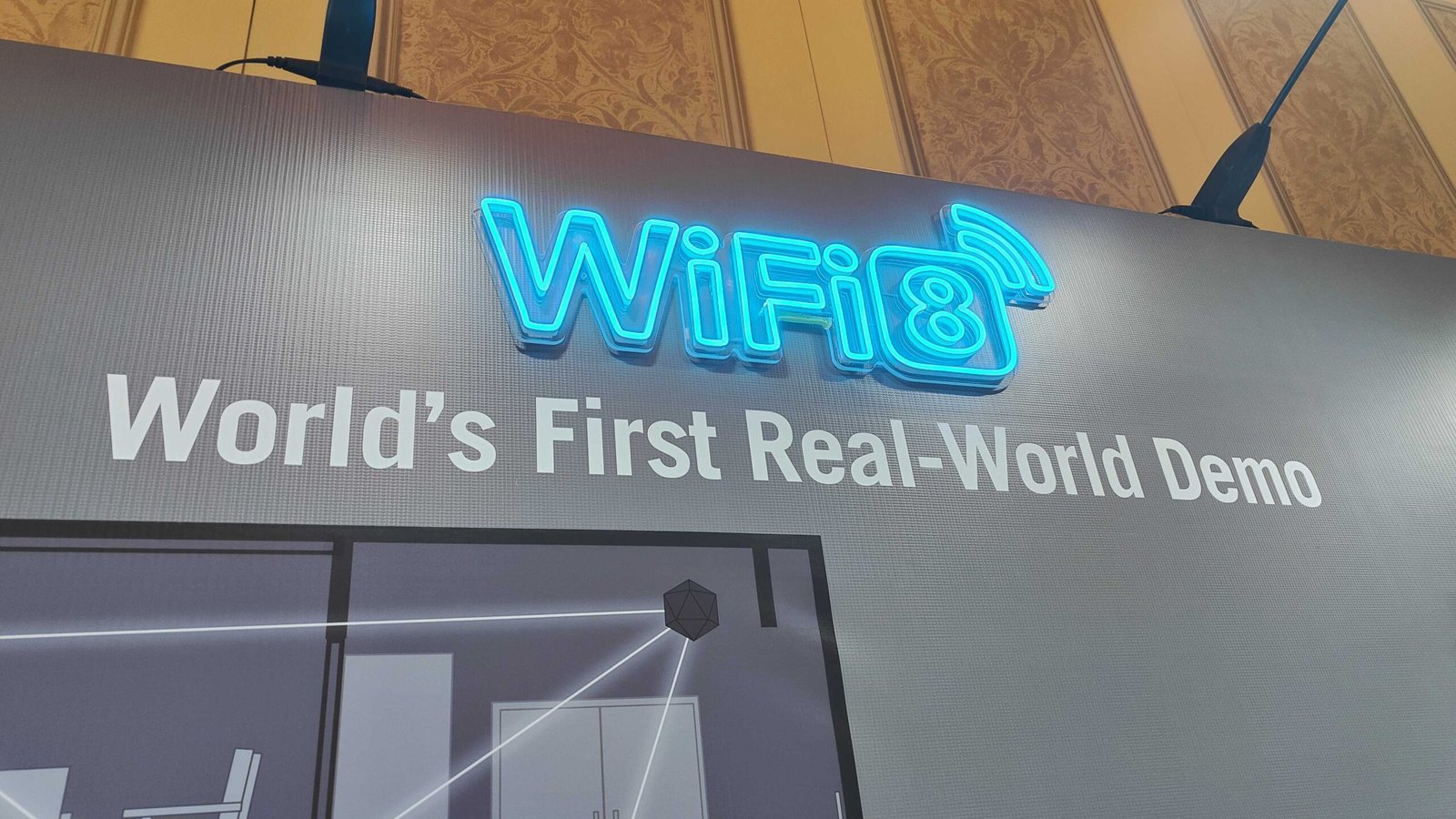
If you’ve shopped for a router in the last month, you’ve probably noticed a new label creeping onto store shelves and product pages: Wi-Fi 8. TP-Link unveiled the world’s first complete Wi-Fi 8 lineup at IFA Berlin 2026, and other manufacturers are racing to follow. But here’s the catch nobody’s marketing department wants to lead with: the Wi-Fi 8 standard itself isn’t even finished yet.
So should you actually buy Wi-Fi 8 hardware right now, or is this another “next-gen” label designed to make your current router feel obsolete before its time? Let’s break down exactly what Wi-Fi 8 is, what it changes, and whether upgrading in 2026 makes sense for your home — and if you want a refresher on getting more out of the hardware you already own, our guide to Windows 11 shortcuts every user should know is a good place to start.
What Is Wi-Fi 8, Exactly?
Wi-Fi 8 is the marketing name for IEEE 802.11bn, the next wireless networking standard after Wi-Fi 7 (802.11be). Unlike previous generations — which mostly competed on headline speed numbers — Wi-Fi 8 takes a fundamentally different approach. Its official IEEE theme is “Ultra High Reliability” (UHR), and the goal isn’t a bigger top-speed number. It’s a more consistent connection, especially in the situations that actually annoy people day to day. You can read the full technical breakdown in Samsung Research’s IEEE 802.11bn technical brief.
According to the standard’s technical goals, Wi-Fi 8 is targeting:
- At least 25% higher throughput in challenging, real-world signal conditions
- 25% lower latency at the 95th percentile (meaning fewer of those random lag spikes)
- 25% fewer dropped packets, especially when roaming between access points in a mesh system
- Reduced power consumption for connected devices
- Improved peer-to-peer performance for direct device-to-device connections
In plain English: Wi-Fi 8 isn’t chasing a bigger number on the box. It’s chasing fewer dead zones, fewer dropped video calls, and smoother performance when a dozen devices are fighting for bandwidth at once.
The Timeline Problem: Wi-Fi 8 Isn’t Finished Yet
Here’s the part that matters most before you spend any money: the IEEE 802.11bn standard is not expected to be fully ratified until around 2028, with Wi-Fi Alliance certification testing not launching until late 2027. Standardization work only began in November 2023, and as of mid-2025 the group had finalized just an early draft defining the standard’s technical scope.
That hasn’t stopped hardware makers from moving fast. TP-Link announced its Archer 8 router platform in May 2026 and followed up at IFA 2026 with a complete lineup — the Archer 8 Ultra router and Deco 8 Ultra mesh system — built on pre-standard Wi-Fi 8 chipsets from Broadcom, Qualcomm, and MediaTek. You can see the full lineup on TP-Link’s official Wi-Fi 8 page. Asus and Taiwanese manufacturer Sercomm have also announced 802.11bn-based products.
This is similar to what happened with Wi-Fi 6E and early Wi-Fi 7 devices: early hardware ships ahead of full ratification, using chipsets that support the draft specification. It generally works, but it does mean early adopters are technically buying into an evolving standard rather than a locked-in one.
Wi-Fi 8 vs Wi-Fi 7: What Actually Changes?
If you’re expecting a dramatic speed leap like the jump from Wi-Fi 5 to Wi-Fi 6, temper your expectations. Reported theoretical peak throughput for Wi-Fi 8 stays around 23 Gbps — essentially unchanged from Wi-Fi 7. The difference is how reliably your devices can actually reach speeds close to that ceiling.
| Feature | Wi-Fi 7 (802.11be) | Wi-Fi 8 (802.11bn) |
|---|---|---|
| Primary Goal | Higher peak speed | Ultra-high reliability |
| Theoretical Peak Throughput | ~46 Gbps (multi-link) | ~23 Gbps (single link focus) |
| Latency at 95th percentile | Baseline | Up to 25% lower |
| Packet Loss / Roaming Drops | Baseline | Up to 25% fewer |
| Standard Status (2026) | Fully ratified | Draft stage; final ~2028 |
| Key Technologies | Multi-Link Operation (MLO), 320MHz channels | Enhanced Long Range (ELR), Distributed Resource Units (DRU) |
Early Wi-Fi 8 hardware, like TP-Link’s Archer 8 Ultra, leans on proprietary reliability features — TP-Link calls its version “StabilityEngine” — layered on top of the draft 802.11bn spec to reduce coverage edge issues and congestion in dense, multi-device homes. Full technical details are in TP-Link’s official Archer 8 announcement.
Real-World Specs: What TP-Link’s First Wi-Fi 8 Devices Offer
To put numbers on it, TP-Link’s flagship Archer 8 Ultra router is rated for up to 19 Gbps of aggregate wireless throughput, backed by an 18-antenna array and a 10 Gbps wired port. The companion Deco 8 Ultra mesh system is rated up to 22 Gbps, with a three-pack designed to cover roughly 9,800 square feet and support more than 200 connected devices — a number that matters more every year as smart-home gadgets multiply. If you’re building out a smarter home setup in general, it’s also worth bookmarking our best budget laptops under $600 in 2026 guide for the devices that’ll actually sit on that network.
These are all vendor-reported figures, so treat them as ceiling numbers rather than guaranteed real-world results — the same caveat that applies to every router spec sheet.
Should You Upgrade to Wi-Fi 8 Right Now?
Here’s the honest, no-hype answer:
For most people, there’s no urgent reason to upgrade to Wi-Fi 8 in 2026. Here’s why:
- The standard isn’t finalized, so early hardware is built on a moving target.
- Wi-Fi 7 routers already deliver excellent real-world performance for the vast majority of homes, and are considerably cheaper right now as retailers discount outgoing stock.
- Early Wi-Fi 8 devices are launching at premium prices aimed at early adopters and networking enthusiasts, not average households.
- Device support is minimal. Almost no phones, laptops, or smart-home gadgets currently ship with Wi-Fi 8 radios, so you won’t see the reliability gains until your other devices catch up.
You might consider an early Wi-Fi 8 upgrade if:
- You live in a large, multi-floor home with persistent dead zones that Wi-Fi 6/7 mesh systems haven’t fully solved.
- You run a heavily congested network — think 20+ smart devices, multiple 4K streams, and video calls happening simultaneously.
- You simply want to be an early adopter and don’t mind paying a premium for future-proofing.
If none of those describe your situation, a well-reviewed Wi-Fi 7 mesh system remains the smarter buy through 2026 and likely into 2027, while the Wi-Fi 8 ecosystem matures and prices come down.
The Bottom Line
Wi-Fi 8 represents a genuine shift in priorities — from chasing bigger speed numbers to actually fixing the dead zones, congestion, and dropped connections that most people complain about. That’s a welcome change. But with the IEEE standard not finalized until roughly 2028 and device support still years away, 2026’s Wi-Fi 8 hardware is early-adopter territory, not a mainstream upgrade yet.
If your current router is handling your household fine, there’s no rush. If you’re already shopping for a new router and want to future-proof your home for the next few years, keep an eye on TP-Link’s Archer 8 lineup and its rivals as they roll out through late 2026 — just budget for early-adopter pricing.