
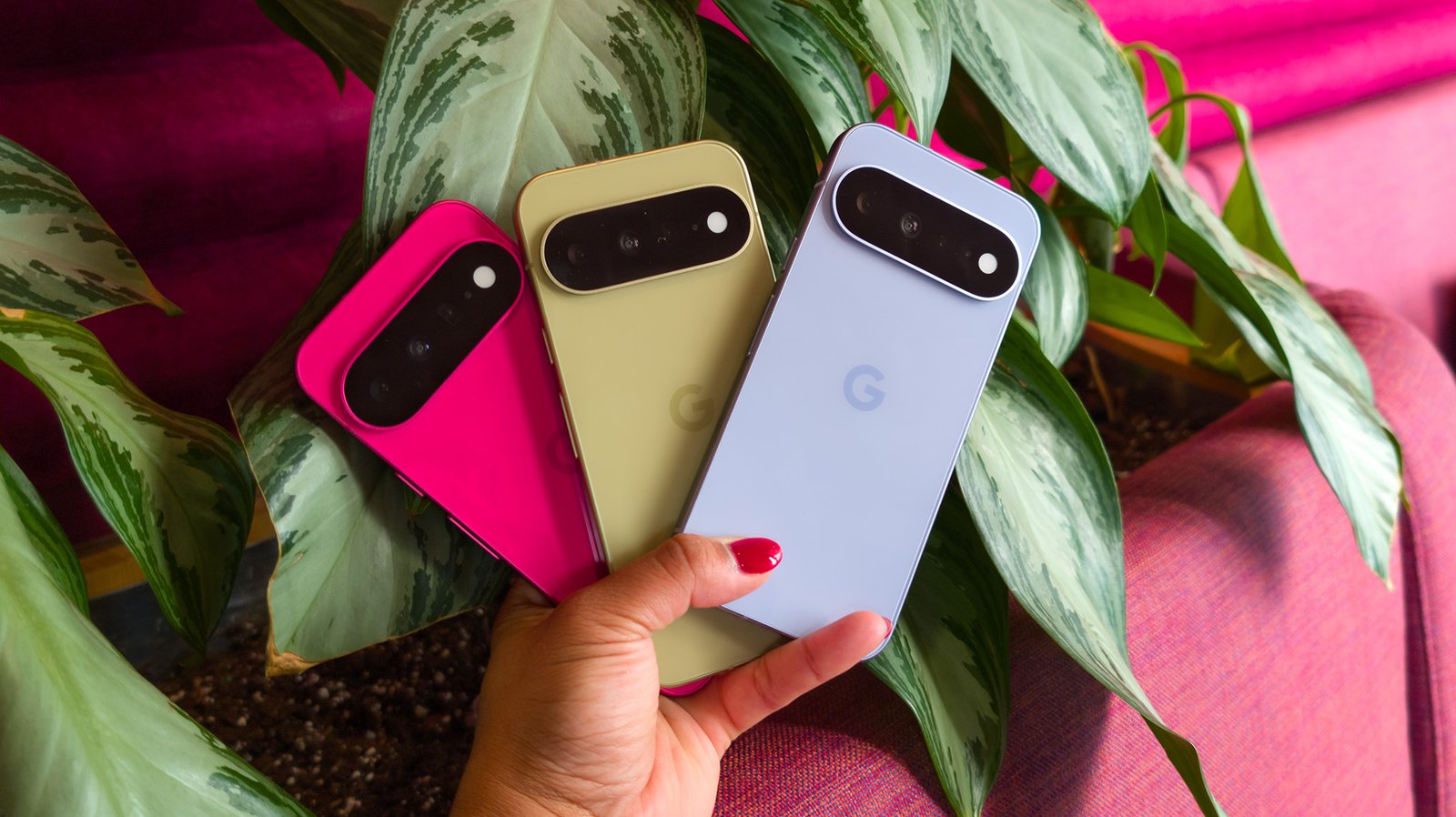
Editor’s note: Google announced the Pixel 11 lineup on August 12, 2026, with wide availability from August 20. That makes the Pixel 10 a previous-generation phone as of this review — which is exactly why it’s worth a fresh look. Outgoing flagship phones tend to become some of the best value buys in tech the moment their replacement ships, and the Pixel 10 is a good example of why.
What the Pixel 10 Actually Is
The regular Pixel 10 launched in August 2025 as the value option in Google’s flagship lineup, sitting below the Pixel 10 Pro and Pro XL. It shipped with a 6.3-inch 120Hz OLED display, the Tensor G5 chip, 12GB of RAM, and — for the first time in the standard (non-Pro) Pixel — a proper telephoto camera with 5x optical zoom alongside the main and ultrawide sensors. US pricing started at $799 for 128GB, with a 256GB option at $899.
Camera: The Reason to Actually Consider It
The camera is still the strongest argument for the Pixel 10 specifically. The 48MP main sensor with f/1.7 aperture and optical stabilization handles most everyday shooting extremely well, and the addition of a proper telephoto lens — a first for the non-Pro Pixel — closed a gap that used to push camera-focused buyers straight to the Pro model. Google’s computational photography, including Auto Best Take and its low-light processing, remains a genuine differentiator against Android competitors at a similar price, and even against some pricier flagships.
Performance and Everyday Use
The Tensor G5 isn’t the fastest chip in its price class on paper, and Qualcomm’s Snapdragon competitors in similarly priced Android phones generally edge it out in raw benchmark numbers. In practice, most reviewers found day-to-day performance — app switching, gaming, multitasking — smooth and unremarkable in the best sense: it doesn’t call attention to itself. Where the Tensor chip earns its keep is in on-device AI tasks, which lean on Google’s own silicon rather than raw CPU horsepower.
Should You Buy It Now, at a Discount?
This is really the only question that matters at this point in the product cycle. With the Pixel 11 now the current flagship, Pixel 10 pricing has already started dropping meaningfully below its original $799 launch price through retailers and carrier trade-in promotions. At a genuine discount — think $150 to $250 off — the Pixel 10 remains a strong buy: you’re getting last year’s flagship camera and a still-current software experience for meaningfully less than flagship pricing.
Where it doesn’t make sense is paying anywhere close to the original $799 MSRP. At that price, the Pixel 11 — with a newer Tensor G6 chip, updated design, and Google’s latest Gemini-powered AI features — is the better long-term buy, since you’d also be starting your software support clock a full generation later.
What You Give Up Compared to the Pixel 11
Beyond the chip generation gap, the Pixel 11 brought a redesigned glass camera bar, new AI-driven camera and productivity features under Google’s “Gemini Intelligence” branding, and — as with most annual refreshes — roughly a year of additional software support runway compared to buying the outgoing model today. None of these are dealbreakers for a budget-conscious buyer, but they’re worth knowing before deciding the discount is worth it. For a closer look at how these AI features actually function day to day, our piece on the rise of on-device AI breaks down what’s changed under the hood across this generation of phones.
How It Compares to Its Closest Rival
At its original $799 price, the Pixel 10’s closest competitor was Samsung’s Galaxy S25, which starts at $849 for a smaller 6.2-inch display, or the S25+ at $999 for a larger screen closer to the Pixel’s size. Both Samsung phones generally edge out the Tensor G5 in raw processing benchmarks, but the Pixel’s camera processing and cleaner software experience remain its strongest counterarguments — especially now that a post-Pixel-11 discount narrows the price gap even further in the Pixel’s favor.
The Bottom Line
The Google Pixel 10 was already one of the better value flagships of 2025, and its position hasn’t really changed — it’s simply shifted from “current flagship” to “excellent discounted option” almost overnight. If you can find it meaningfully below its original launch price, it remains one of the best camera phones you can buy for the money. If you’re paying full price, the Pixel 11 makes more sense given how close the launch pricing now sits. Full specifications for both generations are available on Google’s official Pixel Phone Compare page.