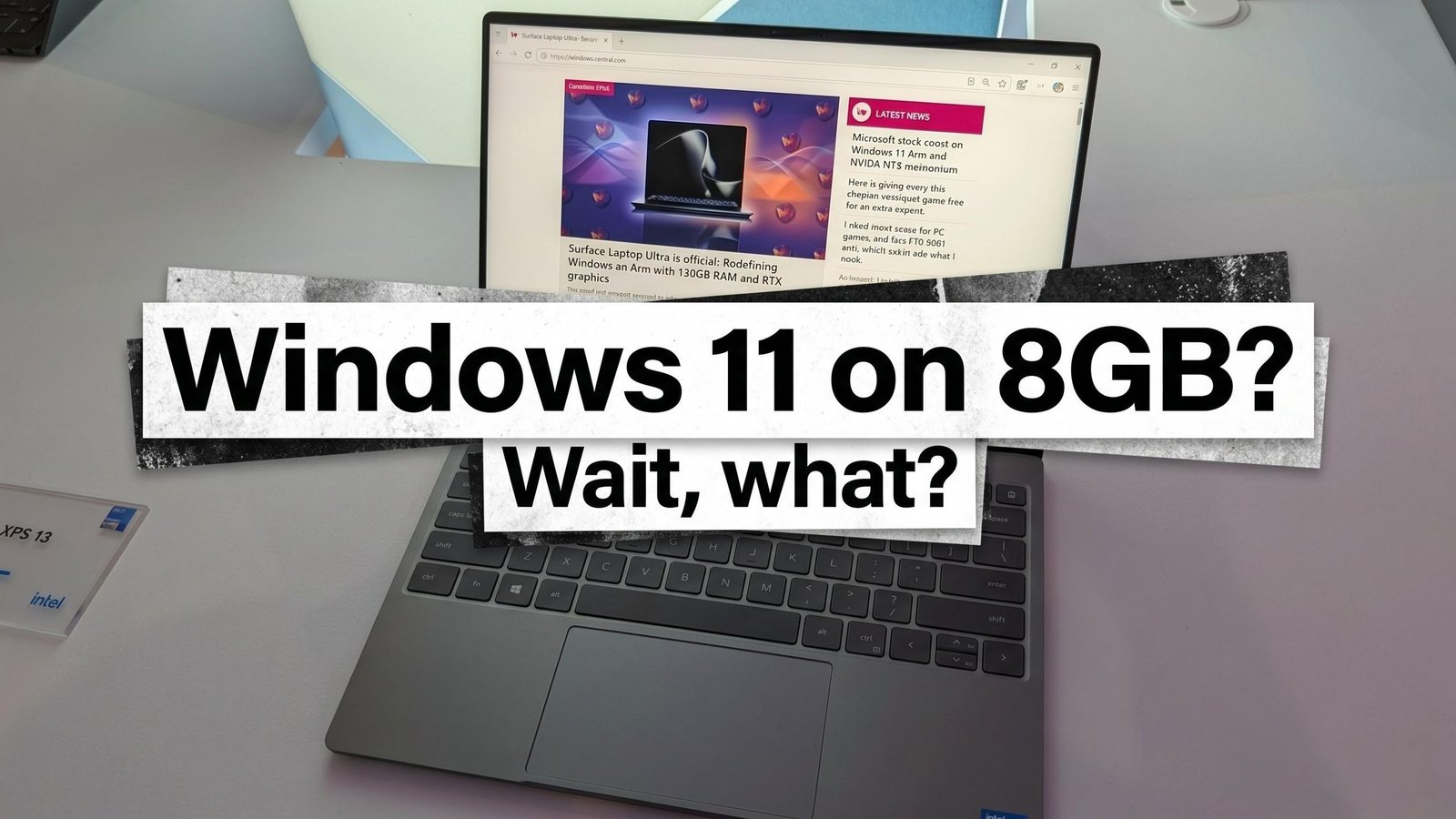
8GB of RAM used to be the safe, boring budget choice — enough for browsing, documents, and light multitasking without paying for capacity you wouldn’t use. In 2026, that math has genuinely broken, and buying a new Windows 11 PC with 8GB is a mistake that’s going to show up fast, not years down the line.
In this article
Windows 11 Has Simply Gotten Heavier
Each Windows 11 update has added more background processes, security features, and AI-adjacent functionality (Copilot integration, Recall-style features, and their associated indexing) than the version before it. None of this is optional bloat you can easily strip out — it’s baked into the OS’s baseline memory footprint, meaning 8GB now gets consumed by the operating system itself before you’ve opened a single application.
The Real-World Symptom: Constant Disk Swapping
When physical RAM runs out, Windows falls back to using your storage drive as virtual memory — dramatically slower than RAM, and the reason an 8GB machine feels fine for the first few minutes, then grinds to a crawl once you have a browser with a dozen tabs, a video call, and a document open simultaneously. This isn’t a one-time annoyance; it’s the daily experience of using an underspecced machine.
 Also readUSB Device Not Recognized in Windows 11? 11 Fixes That Work
The Timing Makes This Even Worse
Buying an 8GB machine right now is a particularly bad bet given where memory prices are headed. According to Notebookcheck’s coverage of TrendForce’s latest forecast, laptop memory prices are expected to rise 88-93% as AI data center demand consumes an outsized share of global DRAM production — meaning even if you wanted to upgrade RAM later, doing so is about to get significantly more expensive than it’s ever been.
Why Manufacturers Keep Selling 8GB Anyway
The honest answer is margin, not genuine adequacy. An 8GB configuration lets a manufacturer advertise a lower headline price, and plenty of buyers don’t realize the practical difference until they’re already living with a sluggish machine. It’s the same dynamic behind cheap laptops with slow eMMC storage instead of a real SSD — the spec sheet looks fine at a glance, the daily experience doesn’t.
What to Actually Buy Instead
16GB is genuinely the realistic minimum for a comfortable Windows 11 experience in 2026, even for basic productivity use — not gaming, not video editing, just normal multitasking with a modern browser. If your budget is tight, it’s worth spending slightly less on the processor or storage tier rather than compromising on RAM, since RAM shortage-driven price increases make this the harder spec to fix after the fact.
If You’re Stuck With an 8GB Machine Already
Closing unused browser tabs, disabling unnecessary startup programs, and turning off visual effects in Windows’ performance settings can meaningfully reduce memory pressure on an existing 8GB machine, even if it won’t fully solve the underlying limitation. Checking whether your specific laptop model supports a RAM upgrade — many thin ultrabooks now solder RAM directly to the board, making this impossible — is worth doing before assuming you’re stuck.
Frequently Asked Questions
Is 8GB of RAM ever acceptable for a Windows 11 PC?
Only for extremely light, single-task use like a dedicated kiosk or basic terminal — for any normal multitasking use case, it’s genuinely insufficient in 2026’s software environment.
Will RAM prices come back down soon?
Most industry forecasts don’t expect meaningful relief before 2027 or 2028, as AI data center demand continues absorbing a large share of global memory production capacity.
The Bottom Line
8GB of RAM stopped being a reasonable budget compromise and became a genuine daily-use liability. With memory prices only heading higher, paying slightly more now for 16GB is one of the more reliably good decisions you can make on a new PC purchase in 2026.