
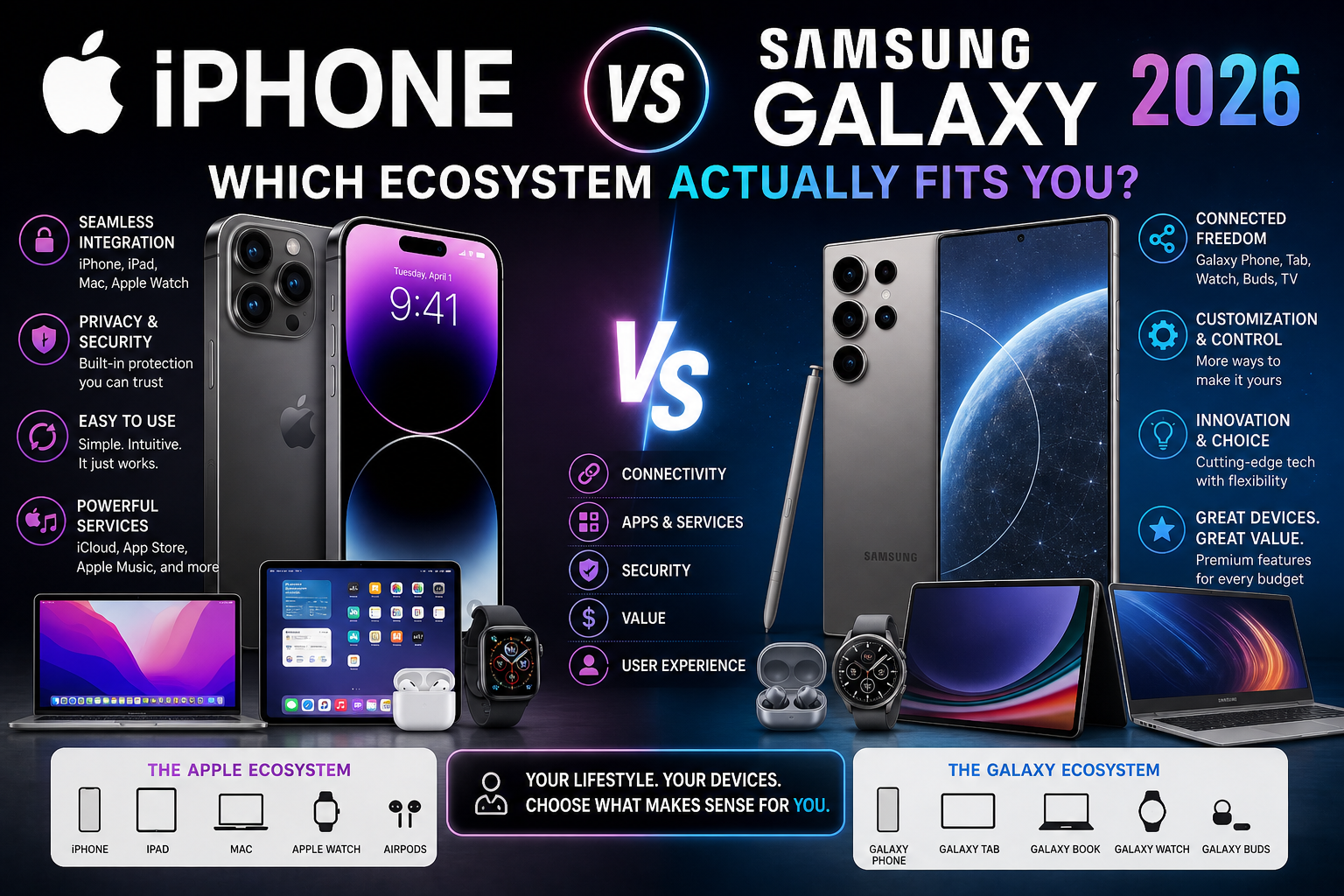
The iPhone vs Samsung Galaxy debate has run for over a decade, and by 2026 the two ecosystems have matured to the point where the decision is less about which phone is objectively “better” and more about which ecosystem and workflow actually fits how you use a phone daily. Our Best Smartphones 2026 guide covers the broader flagship landscape if you’re comparing beyond just these two brands.
The Ecosystem Question Matters More Than Specs
For most buyers already invested in one ecosystem — a MacBook and AirPods, or a Windows PC and other Android/Galaxy devices — switching brands introduces real friction beyond just learning a new interface. iMessage, Handoff, and AirDrop create genuine convenience within Apple’s ecosystem that doesn’t transfer to Android, while Samsung’s DeX desktop mode and broader Google service integration offer different but comparably useful cross-device conveniences. GSMArena’s ongoing flagship comparisons is useful for direct spec comparisons once you’ve settled on which ecosystem fits your existing devices.
Software Philosophy: Curated vs Customizable
iOS remains more locked down and curated — consistent design, controlled app distribution, and fewer customization options, which appeals to users who prioritize simplicity and predictability. Samsung’s Android skin (One UI) offers substantially more customization — home screen layouts, default app choices, and deeper system-level settings — appealing to users who want more control over how their phone looks and behaves.
Camera Philosophy Differences
Both ecosystems produce excellent camera output, but with different processing philosophies. iPhone cameras historically favor more natural, less aggressively processed images, while Samsung’s processing tends toward punchier colors and more aggressive sharpening by default — a difference some describe as more “Instagram-ready” out of camera. Neither approach is objectively better; it’s a matter of personal preference for how you want your photos to look without additional editing.
Update Longevity: Both Have Improved Significantly
Apple has historically offered longer guaranteed software support, but Samsung has closed much of this gap in recent years, now offering multi-year update commitments on its flagship Galaxy line that rival Apple’s typical support window. This is worth verifying for the specific current-generation models you’re comparing rather than assuming historical patterns still hold, since both companies have shifted their policies upward in recent years. Our Windows vs macOS 2026 guide covers a similar ecosystem-lock-in consideration applied to the laptop decision, which often pairs with your phone ecosystem choice.
Price and Model Range Flexibility
- Samsung offers a wider range of price points and screen sizes within its current flagship and mid-range lineup
- Apple’s lineup is narrower but generally holds resale value better over time
- Samsung’s foldable lineup remains more mature and varied than Apple’s current offerings in that category
- Both ecosystems offer strong budget-tier options that share many flagship features at lower prices
Switching Costs Worth Considering
Beyond software preference, switching between ecosystems carries real practical friction: purchased apps that don’t transfer, accessories (chargers, cases, smartwatches) that need replacing, and messaging history that’s difficult to migrate cleanly between iMessage and Android messaging apps. This doesn’t mean switching is wrong if your needs have genuinely changed, but it’s worth weighing against simply staying within your current ecosystem, especially if you’re already invested in accessories and other connected devices.
For households split between iPhone and Android users, cross-platform apps for messaging, photo sharing, and file transfer help reduce friction, though they rarely match the seamlessness of same-ecosystem communication that iMessage or Samsung’s own ecosystem provides.
Which Actually Fits You
Choose iPhone if you’re invested in Apple’s ecosystem, prioritize long-term software support and resale value, and prefer a more curated, simpler software experience. Choose Samsung Galaxy if you want more customization control, prefer Samsung’s or Google’s broader service ecosystem, want more flexibility in screen size and price point, or are interested in foldable form factors. Neither choice is a mistake — the right one depends entirely on which ecosystem and software philosophy matches how you actually use your devices.
The Bottom Line
The iPhone vs Samsung Galaxy decision in 2026 comes down to ecosystem fit and software philosophy far more than any single hardware advantage, since both brands now offer excellent cameras, displays, and performance at the flagship tier. Consider what other devices you already own and which software experience — curated or customizable — actually suits your daily habits before deciding.