
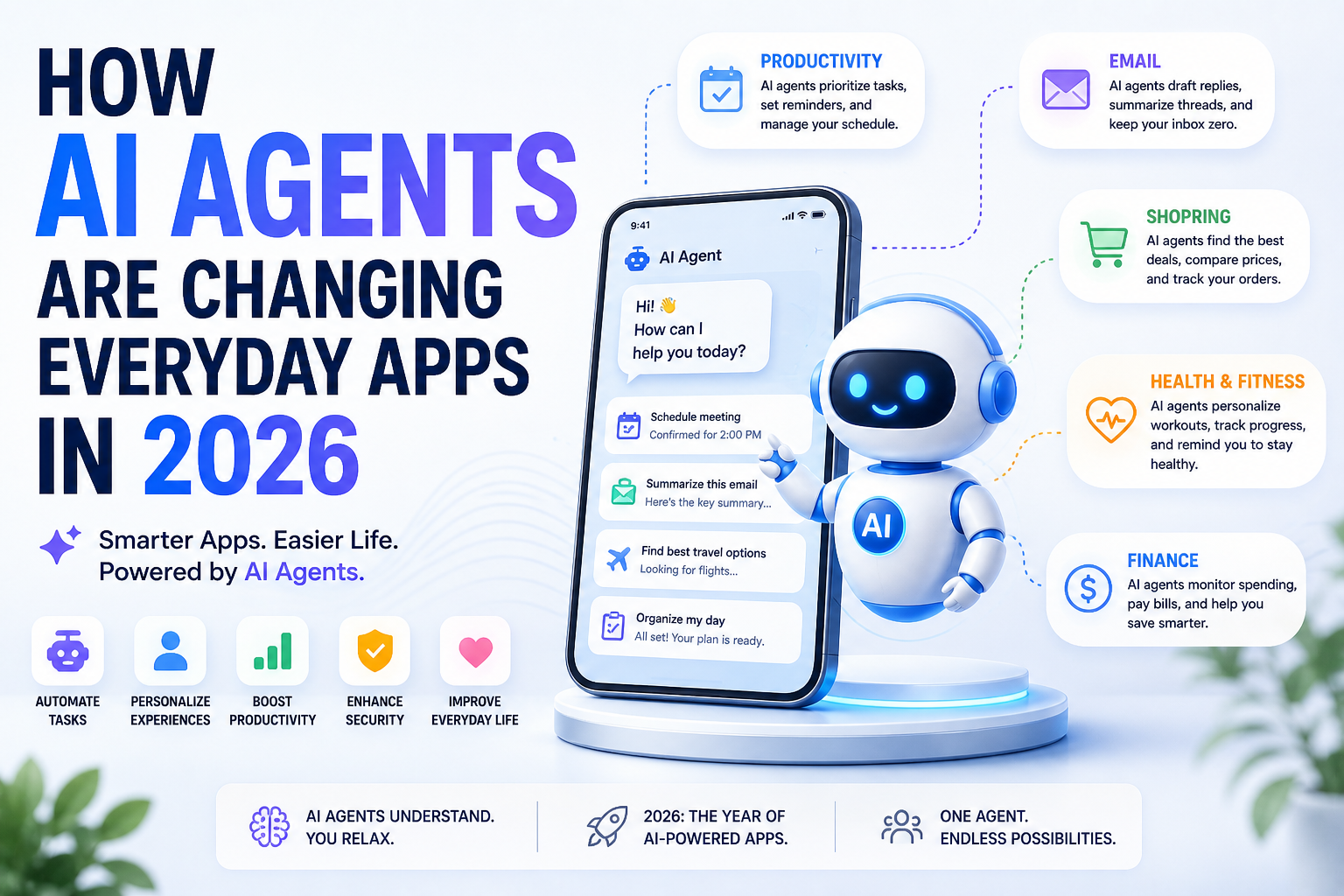
AI agent” has become one of the most overused terms in tech marketing in 2026, but underneath the buzzword, a genuinely meaningful shift is happening in how everyday apps work — moving from passive tools you operate step by step toward systems that can complete multi-step tasks on your behalf. Our ChatGPT vs Claude vs Gemini guide covers the underlying AI assistants that increasingly power these agent capabilities.
What Actually Makes Something an “AI Agent”
The meaningful distinction between a basic AI chatbot and a genuine AI agent is the ability to take multi-step action toward a goal with limited ongoing human input — booking a reservation across multiple steps, researching and compiling information from several sources, or managing a multi-part task rather than just answering a single question. Many products labeled “AI agents” in marketing still function closer to enhanced chatbots, so it’s worth evaluating actual demonstrated capability rather than the label alone.
Where Agent Features Are Genuinely Useful Today
Email and calendar management (drafting responses, scheduling around stated preferences), research compilation across multiple sources, and code-related multi-step tasks (writing, testing, and revising code with limited supervision) represent the areas where agent capabilities have moved from novelty to genuine daily usefulness. MIT Technology Review’s coverage of practical AI agent deployment has tracked which specific use cases have moved beyond demos into reliable daily tools versus which remain more aspirational.
Where Agent Features Still Fall Short
Complex, judgment-heavy tasks with significant real-world consequences — financial decisions, legal document review, anything requiring nuanced context an AI system might miss — still benefit from human oversight rather than full agent autonomy. Current agent implementations also still occasionally fail in ways that are hard to predict, making unsupervised use risky for anything with meaningful consequences if something goes wrong.
Browser and Computer-Use Agents: The Newest Frontier
A newer category of AI agents can directly interact with websites and software interfaces — clicking buttons, filling forms, navigating multi-step web processes — extending agent capability beyond text-based tasks into actually operating software the way a human would. This remains an early, rapidly evolving capability with real reliability limitations, and most current implementations work best on relatively simple, well-structured tasks rather than complex, unpredictable interfaces. Our How Good Are AI Coding Assistants Really guide covers a mature example of AI taking real action (writing and testing code) with meaningful reliability, offering a useful benchmark for evaluating newer agent categories.
Privacy and Permission Considerations
- Agents that can take real-world action (making purchases, sending communications) require careful permission scoping to avoid unintended actions
- Check what data an agent tool can access and whether that access is genuinely necessary for its stated function
- Look for tools that require explicit confirmation before consequential actions (payments, sending messages) rather than fully autonomous execution
- Understand that agent tools accessing multiple connected services (email, calendar, files) create a larger combined privacy surface than any single app alone
How to Evaluate Whether an Agent Feature Is Actually Useful
Rather than being drawn in by agent-related marketing claims, evaluate specific tools against a concrete task you actually need done regularly. If an agent feature reliably saves meaningful time on a real recurring task without requiring constant correction, it’s genuinely useful; if it requires more oversight and correction than doing the task manually, the current implementation isn’t mature enough for your specific need yet, regardless of how impressive its demo looked.
The Trust Question: How Much Autonomy Is Appropriate
A useful mental model for deciding how much autonomy to grant an AI agent is matching the stakes of a task to the level of oversight required — low-stakes, easily reversible actions (drafting an email you’ll review before sending) are reasonable to automate heavily, while high-stakes or hard-to-reverse actions (sending payments, deleting data, communicating externally on your behalf) warrant explicit confirmation steps regardless of how reliable the underlying agent technology has become. This framework holds up better over time than trying to judge overall agent “trustworthiness” as a single fixed property.
The Bottom Line
AI agents represent a genuine shift in how software works, but the technology remains uneven — genuinely reliable for some multi-step tasks like email management and code assistance, still maturing for others like autonomous web navigation. Evaluating specific tools against your actual recurring tasks, rather than trusting broad agent marketing claims, is the most reliable way to separate genuinely useful capability from hype.