
Foldable phones have spent the better part of six years as the smartphone industry’s most interesting experiment that most people still weren’t buying. Early models cracked, hinges failed, and the price premium was hard to justify for a device that still felt fragile. That story has genuinely changed in 2026 — durability, software, and even pricing have all moved in the right direction at once, though “ready for everyone” still comes with some real caveats worth understanding before you buy.
The Durability Problem Is Mostly Solved
Hinge durability was the single biggest reason people hesitated on foldables, and it’s the area that’s improved the most. Samsung’s own testing rates the Galaxy Z Fold 7’s hinge for roughly a decade of average daily use before failure becomes a real concern — a genuine leap from the 200,000-fold rating on the previous generation. The bigger milestone came from Google: the Pixel 10 Pro Fold became the first foldable with a full IP68 dust and water resistance rating, matching the standard set by ordinary flagship phones for years. Samsung’s Fold still carries only an IP48 rating, meaning it resists water but remains more vulnerable to fine dust entering the hinge mechanism — a real if narrowing gap between the two ecosystems.
Three Distinct Categories, Not One
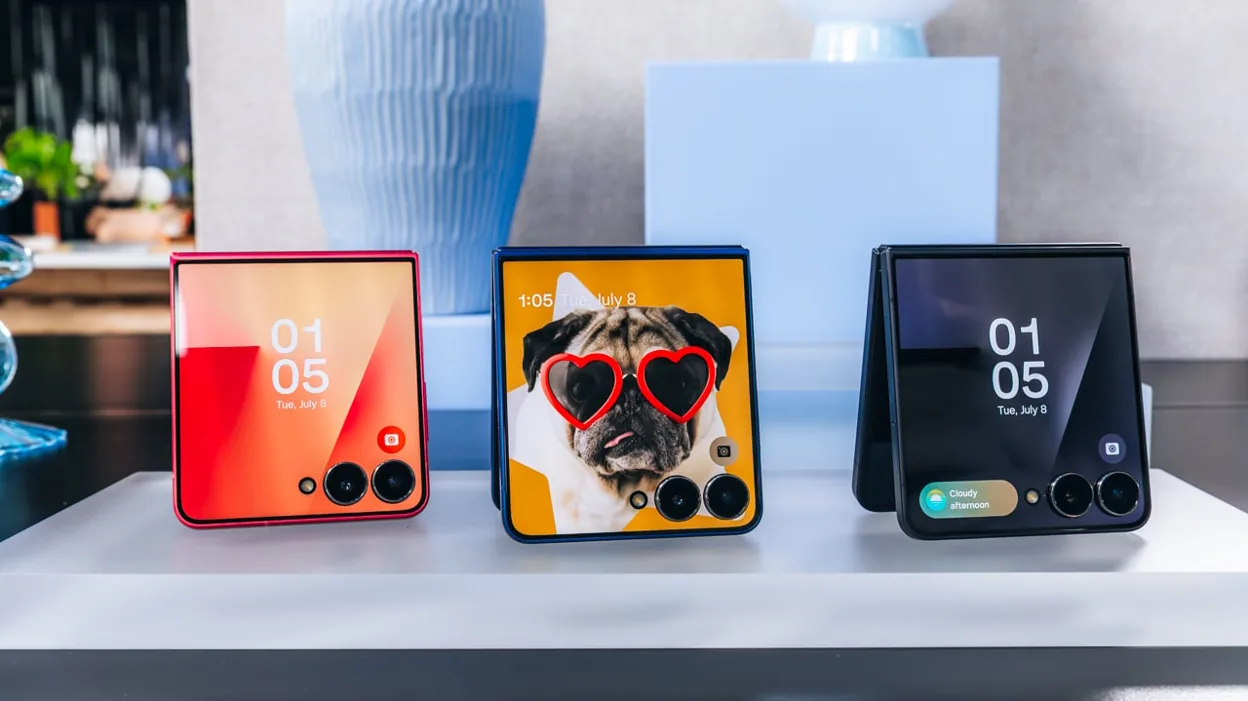
“Foldable phone” now covers three genuinely different device types, and picking the right category matters more than picking the right brand. Book-style foldables like the Galaxy Z Fold 7 and Pixel 10 Pro Fold open horizontally into a small-tablet shape, built around multitasking, reading, and productivity — genuinely useful if you want one device to replace both a phone and a small tablet. Flip-style foldables like the Galaxy Z Flip 7 and Motorola Razr Ultra fold vertically into a compact square, prioritizing portability over screen real estate, with an increasingly useful cover screen for quick glances without opening the phone. Tri-fold devices like the Samsung Galaxy Z TriFold push furthest into tablet territory, unfolding to nearly 10 inches — genuinely impressive, but still an early-adopter category rather than a mainstream recommendation.
What Changed Software-Wise
Early foldables were held back as much by software as hardware — apps that didn’t adapt properly to the unfolded aspect ratio, awkward split-screen implementations, and a general sense that Android wasn’t really built with this form factor in mind. That’s improved substantially. Android’s windowing has matured into genuine resizable, overlapping multitasking with a proper taskbar, and app support for large-screen layouts has caught up enough that the split-screen “run two apps side by side” use case — genuinely one of the best reasons to own a book-style foldable — now works reliably across most major apps rather than a handful of Google’s own.
The Price Problem Hasn’t Fully Gone Away
This is the honest caveat: foldables remain expensive. Book-style options like the Galaxy Z Fold 7 and Pixel 10 Pro Fold typically run $1,600 to $2,000 at launch, and flip-style phones start around $950 to $1,100. Pricing has become more volatile in a useful way, though — carrier trade-in deals and promotions frequently cut $300 to $500 off launch pricing, which is where most buyers should be shopping rather than paying full retail. If you’re weighing a foldable against Apple’s ecosystem, it’s also worth noting Apple is expected to enter the category with its own book-style foldable, reportedly priced around $2,000 — until that actually ships, comparisons remain speculative.
Who Should Actually Buy One in 2026
Foldables have found their real audience: people who genuinely multitask on their phone daily and want a pocket tablet without carrying a separate device, professionals who take a lot of video calls and want a bigger screen for it, and photographers drawn specifically to the Pixel Fold’s camera system, which now leads the category. If your phone use is mostly single-app browsing, messaging, and occasional photos, a well-specced standard flagship will serve you just as well for meaningfully less money — foldables solve a specific set of problems well rather than being a universal upgrade. For a broader look at how on-device processing is shaping phone software more generally, our coverage of on-device AI on phones is a useful companion read.
The Bottom Line
Foldable phones in 2026 no longer feel like a bet on unproven hardware — the hinge durability numbers, the IP68 rating on Google’s flagship, and the maturing multitasking software all point to a category that’s genuinely figured itself out. The remaining barrier is almost entirely price, and that’s a much easier problem to work around with trade-in deals and patience than the durability concerns that defined this category for its first several years. For current specs and pricing across the major 2026 models, GSMArena’s foldable phone hub is a reliable place to compare before buying.