
A portable battery pack that takes half a day to fully recharge feels broken, but in most cases it’s working exactly as designed — the slow charge time is a direct consequence of capacity and charging speed limits, not a defect.
Capacity Is the Main Driver
A power bank’s charge time scales directly with its capacity, measured in milliamp-hours (mAh) or watt-hours (Wh). A large 20,000mAh+ battery pack, built specifically to charge a laptop or provide multiple phone charges, inherently takes longer to refill than a small 5,000mAh pack — you’re moving significantly more total energy into the same charging port.
The Input Wattage Bottleneck
Many battery packs can output fast charging to your devices while only accepting a much slower input rate themselves — a pack might output 65W to charge your laptop quickly, but only accept 18W or 30W input when you’re recharging the pack itself. This asymmetry is extremely common and is usually listed separately in the product specs as “input” versus “output” wattage, a detail many buyers overlook when comparing packs.
The Charger You’re Using Matters More Than People Expect
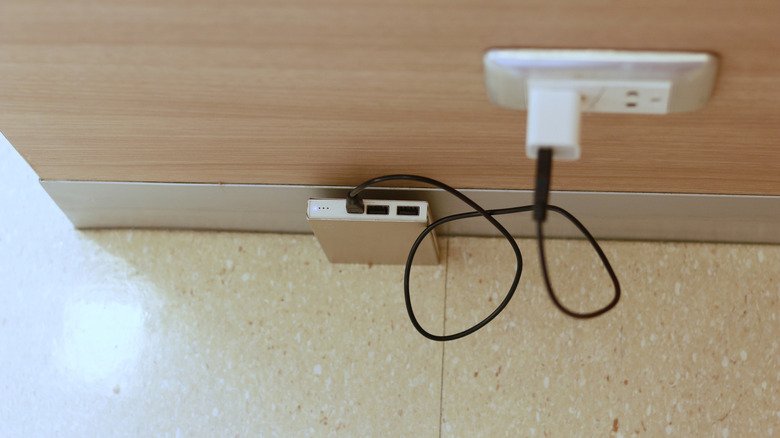
Plugging a battery pack into a low-wattage charger — an old 5W phone charger, for example — will charge it dramatically slower than using a proper high-wattage USB-C PD charger that matches the pack’s actual maximum input rating. This is one of the most common, easily fixable reasons a battery pack seems to take forever: the charger, not the pack itself, is the bottleneck.
Battery Chemistry and Heat Management
Lithium-ion and lithium-polymer batteries — the standard in virtually all modern power banks — charge fastest early on, then intentionally slow down as they approach full capacity, a safety mechanism to reduce heat buildup and long-term battery degradation. This is why a pack might charge to 80% relatively quickly, then seem to crawl for the final 20%.
Why Bigger Packs Aren’t Always the Better Choice
If you mainly need a couple of phone top-ups during a travel day, a smaller, faster-charging pack is often more practical than a large-capacity one that takes most of a day to refill between uses. According to BGR’s breakdown of what actually determines charge time, matching pack capacity to your actual typical use case — rather than just buying the highest mAh number available — usually produces a better real-world experience than maximizing capacity alone.
How to Actually Speed Up Charging Your Pack
Check your specific pack’s maximum input wattage rating, then use a charger and cable rated to match or exceed that number — a mismatched cable or charger is the most common, easily fixable cause of a battery pack charging slower than its specs suggest it should.
Frequently Asked Questions
Is it bad to leave a battery pack charging overnight?
Most modern power banks include overcharge protection that stops charging once full, making overnight charging generally safe, though unplugging once you know it’s full is still a reasonable habit for long-term battery health.
Does charging a power bank while using it to charge another device work well?
It works on most packs supporting “pass-through” charging, though it’s generally slower and generates more heat than charging the pack and the device separately.
The Bottom Line
A slow-charging battery pack is almost always a predictable consequence of its capacity, your charger’s wattage, or normal lithium-ion charging behavior near full capacity — rarely an actual defect. Matching pack capacity to your real needs, and using a properly rated charger, solves most of the frustration.