
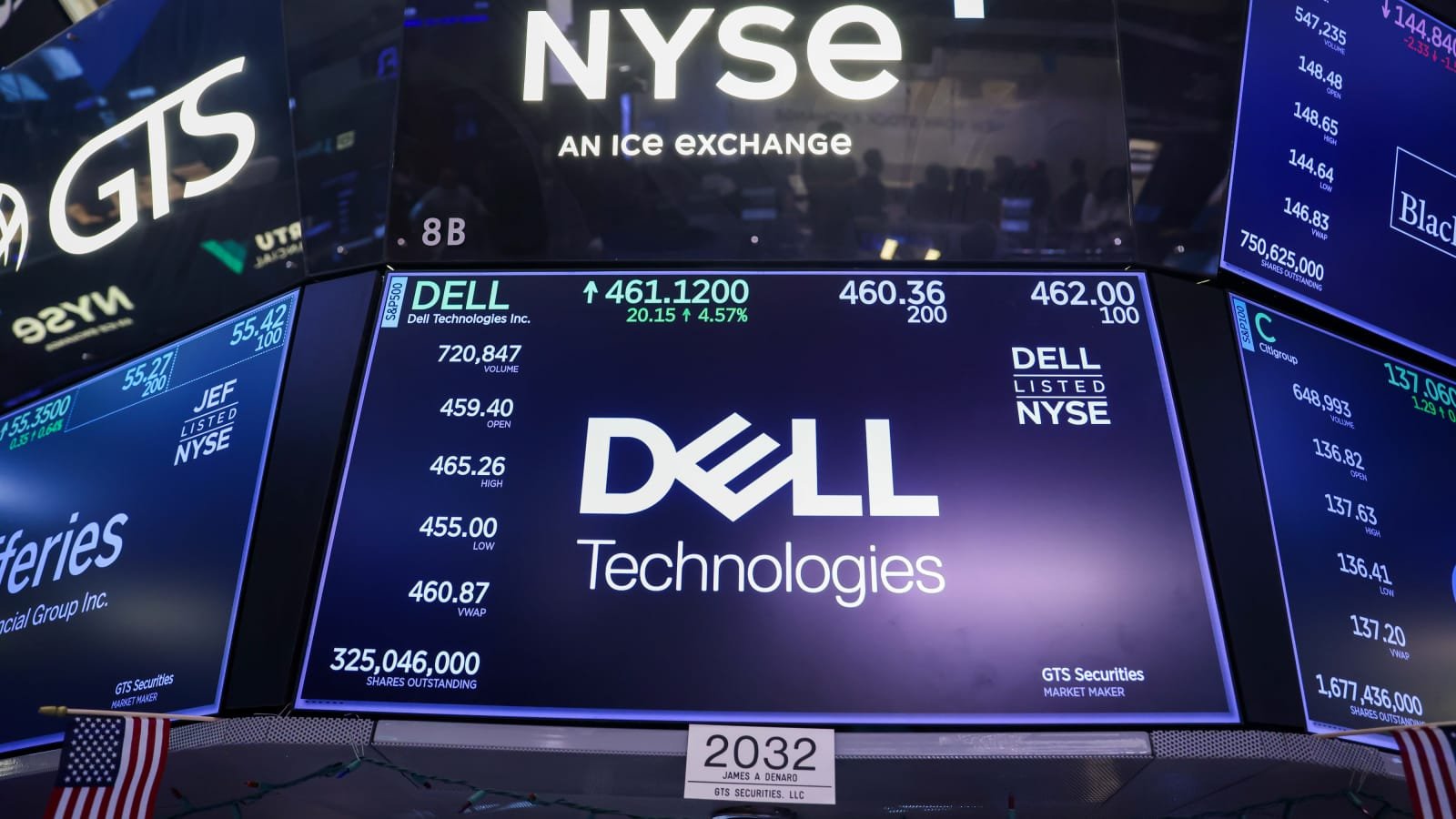
The technology landscape of 2026 is being defined by a massive corporate race toward artificial intelligence infrastructure deployment. Amid this global hardware gold rush, Dell Technologies has emerged as one of the most prominent market success stories, witnessing an extraordinary surge in its stock valuation—climbing roughly 350% over recent cycles. Fueled by unprecedented enterprise demand for high-performance AI servers and specialized rack architectures, Dell has successfully positioned itself as an indispensable bridge between raw chip makers and corporate data centers. To understand how broader component markets and memory constraints interact with these server deployments, take a look at our coverage on Micron’s Record Earnings and the Global Memory Shortage.
The AI Server Super-Cycle and Enterprise Adoption
For decades, Dell was primarily recognized as a reliable titan in traditional enterprise personal computing, laptops, and legacy server deployments. However, the generative AI boom transformed corporate priorities overnight. Companies across every major sector—ranging from financial services to healthcare—are now racing to build private LLM clusters or deploy hybrid cloud intelligence. This massive shift caught many legacy providers flat-footed, but Dell rapidly engineered high-density server configurations capable of housing next-generation processors. This mirrors the aggressive hardware shifts seen across consumer and professional tech sectors, similar to the trends analyzed in our breakdown of CES 2026’s Laptop Chip War.
Financial Performance and Wall Street Validation
The market response to Dell’s strategic pivot has been nothing short of historic. Wall Street analysts have repeatedly had to revise upward earnings projections as quarterly backlog figures for AI-optimized servers continue to shatter previous records. According to financial market trackers and reports from Yahoo Finance, Dell’s revenue expansion is heavily anchored by multi-billion-dollar commitments from major cloud service providers and sovereign AI initiatives. These massive orders have not only driven the stock’s dramatic 350% ascent but have also structurally elevated the company’s long-term margin profile. For a look at how specialized mobile hardware is evolving to match these intensive workloads, check out our guide on HP’s ZBook Ultra G3a AI Workstation.
Engineering Challenges: Liquid Cooling and Power Densities
Building AI servers is vastly different from traditional enterprise rack units. Modern artificial intelligence accelerators generate unprecedented amounts of heat, requiring advanced thermal management and liquid-cooling solutions integrated directly into data center architecture. Dell’s engineering teams invested heavily in proprietary thermal engineering frameworks, allowing their server racks to sustain peak workloads without thermal throttling or hardware degradation. This focus on heavy-duty performance optimization reflects the broader industry push toward rigorous hardware standards, as discussed in our review of AI Coding Assistants Tested.
Sustainability and Power Infrastructure Pressures
As thousands of high-density AI servers roll out into enterprise data centers, a secondary crisis has emerged around grid capacity and energy consumption. Modern AI training and inference clusters demand massive amounts of electrical power. Dell has had to innovate around power distribution units (PDUs) and energy efficiency to help enterprise clients minimize operational overhead. Balancing raw computational power with sustainable power management remains one of the defining engineering hurdles for the industry moving forward, influencing how future hardware iterations are designed and deployed.
The Bottom Line
Dell’s 350% stock surge is much more than a temporary market anomaly; it represents a fundamental validation of the company’s aggressive pivot toward enterprise AI infrastructure. By successfully supplying the heavy hardware backbone required for modern generative AI models, Dell has secured its position at the forefront of the hardware revolution. As enterprise demand continues to mature, tracking Dell’s ongoing server delivery milestones will remain a critical indicator of broader technological momentum.